Business Insurance
Livestock Insurance
Protect the Animals Your Livelihood Depends On
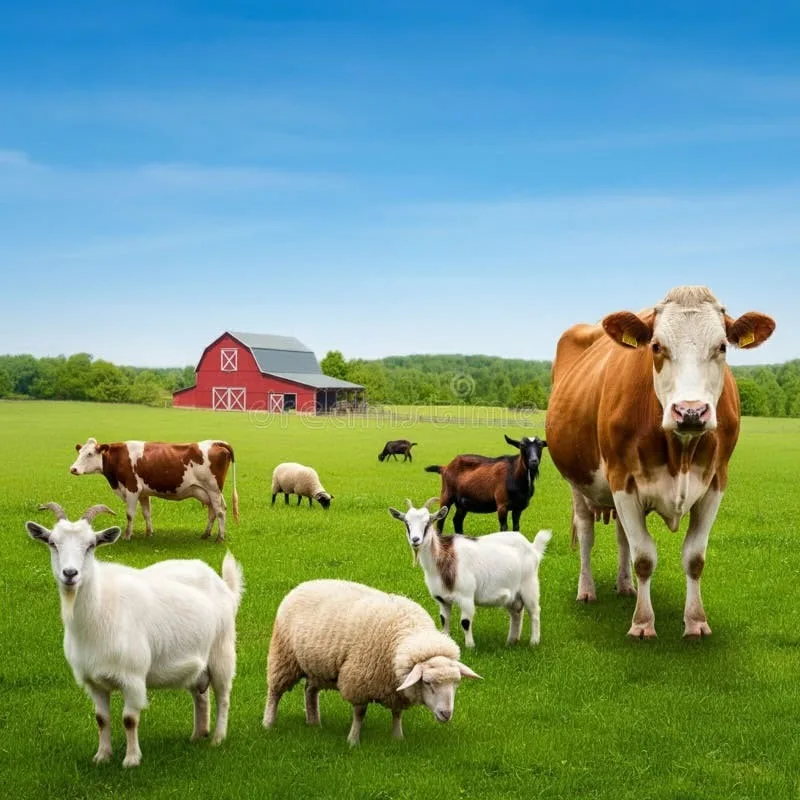
Cover for the mortality of insured animals — cattle, sheep, goats, poultry, pigs, and others — from accident, disease, epidemic, fire, difficult delivery, and snake bite, so a lost animal doesn't set your operation back.
03
Cover options
29
Underwriters
24/7
Claims support
Cover options
Your cover options
Choose the option that matches your needs. Exact terms, limits, and extensions vary by insurer and policy.
01
Accident & Injury
Compensation for the death of an insured animal caused by accident, injury, snake bite, or emergency slaughter on veterinary advice.
02
Disease & Epidemic
Covers mortality from illness, terminal disease, and notifiable disease outbreaks, subject to the policy's terms and any required vaccinations.
03
Fire, Lightning & Calving
Covers death from fire, lightning, and complications arising during calving or birth.
What's covered
What applies to your policy depends on the cover level you choose and any extensions added.
Also included
- Protects your investment. Recover the insured value of breeding stock, dairy animals, or fattening stock after a covered death.
- Covers many species. Cattle, sheep, goats, poultry, pigs, rabbits, horses, and fish can all be insured.
- Herd or individual. Insure a single high-value animal or an entire herd or flock.
- Works with financing. Often required by lenders and cooperatives financing livestock purchases.
Policy details
Choose a topic below to read more.
Is it right for you?
The unexpected loss of an animal can mean more than losing an asset — it can affect income, production, and the future of your farming operation. Livestock Insurance helps reduce the financial impact of covered losses and gives farmers greater confidence in protecting their investment.
Eligibility and age brackets
Insurers apply age limits and health standards. Cattle are typically insurable from about 3 months to 8–10 years, sheep and goats from about 60 days to 5 years, and poultry by life stage (broilers from day 1 to 8 weeks, layers up to around 1.5 years). Each animal must be in good health with no pre-existing condition or sign of terminal illness, and be permanently identified by ear tag, tattoo, or a served bolus.
Husbandry and biosecurity conditions
To keep the policy valid you must maintain good animal husbandry — following vaccination schedules, deworming, and tick control — and provide proper housing and paddock fencing, especially to qualify for any theft extension. Voluntary cover is normally on a whole-herd basis: you insure all the animals in the herd rather than only the sickly or high-risk ones.
Who this cover is for
- Dairy and beef farmers
- Sheep and goat keepers
- Poultry and pig producers
- Cooperatives and SACCOs financing livestock
- Commercial ranches and feedlots
What's not covered
- Theft, straying, or unaccounted disappearance (unless specifically added)
- Death from pre-existing conditions or natural old age
- Wilful neglect, poor feeding, or undisclosed illness
- Intentional slaughter without veterinary direction
This is a general list. Your policy wording sets out the full exclusions that apply.
What you'll need
To take out cover
- Copy of ID or business registration documents
- Type and number of animals
- Location of the livestock
- Animal identification details where applicable
- Estimated value of the livestock
- Relevant veterinary or health information where required
To make a claim
- Veterinary report
- Post-mortem report (where required)
- Animal identification records
- Proof of ownership
- Completed claim form
Call your vet and notify Cush or your insurer as soon as an insured animal falls seriously ill or dies, and keep identification and records available for assessment.
Requirements vary by insurer, type of cover and circumstances. Our team will tell you exactly which documents your policy needs.
Key terms
Mortality Cover
The policy pays out on the death of an insured animal from a covered cause, up to its insured value.
Insurable Interest
You must financially benefit from the animal's survival — as owner, financier, or keeper.
Agreed Value
A value fixed with the insurer at inception, based on a valuation certificate, that the claim is settled against.
Whole Herd Basis
A condition that all animals in the herd are insured, not only the older or higher-risk ones.
Identification
Permanent marking of each animal — ear tag, tattoo, or served bolus — required for cover and surrendered when a claim is made.
FAQ
Frequently asked questions.
Quick answers on livestock insurance. More on the FAQ page.
See all FAQsWhich animals can be insured?
Cattle, sheep, goats, poultry, pigs, rabbits, horses, and fish are all insurable, individually or as a herd or flock.
Is theft or straying covered?
Standard livestock cover is a mortality policy. Theft and straying — and unaccounted disappearance — can sometimes be added by extension, and usually require proper housing and fencing. Ask your advisor.
What are the age limits?
Roughly: cattle from 3 months to 8–10 years, sheep and goats from 60 days to 5 years, and poultry by life stage. Exact brackets vary by insurer.
Do I have to insure my whole herd?
Usually yes. Voluntary cover is normally on a whole-herd basis so farmers can't insure only the sickly or high-risk animals.
How is the premium worked out?
Typically 4%–9% of the pre-agreed market value of the livestock, often subject to a minimum premium.
What do I need to claim?
Notify the insurer immediately, surrender the ear tag, and provide a veterinary report and a post-mortem or veterinary death certificate within the time the policy allows.
More Business Insurance 
Related cover
Business Insurance
Goods in Transit (GIT)
Protect Your Goods While They Are on the Move
Learn more
Ask on WhatsApp
Business Insurance
Workplace Injury Cover (WIBA)
Protect Your Employees. Protect Your Business.
Learn more
Ask on WhatsApp